

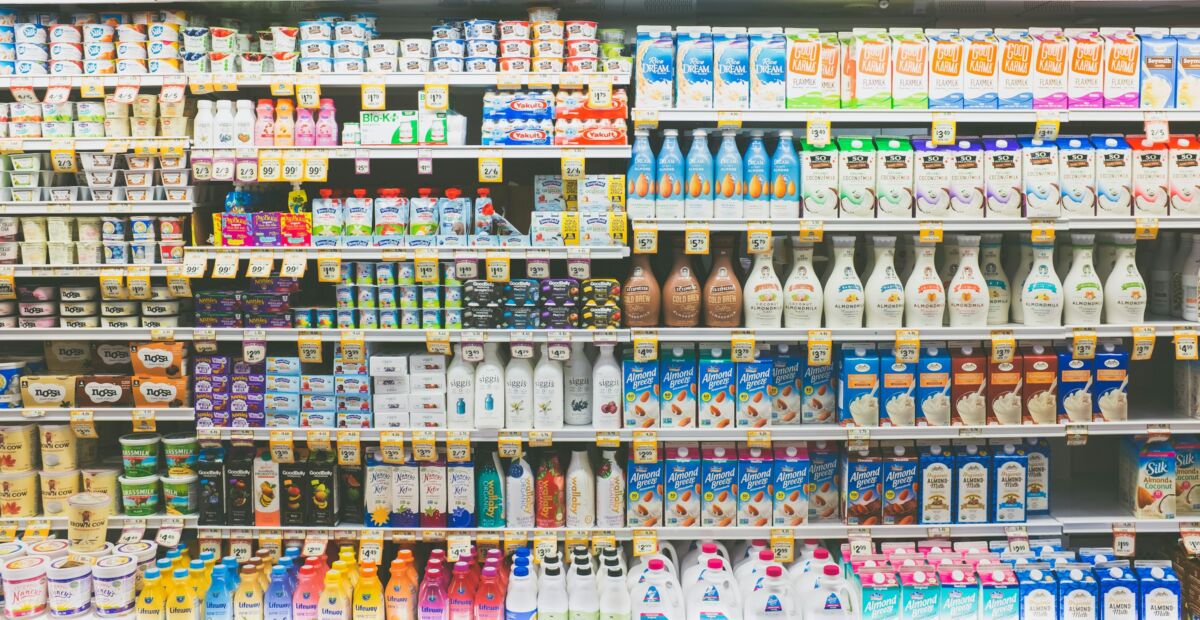
For nearly four decades, I lived under the assumption that my body was broken. A single glass of milk or a piece of soft cheese would leave my stomach in knots within minutes. After my family emigrated from Seoul to the United States in 1988, the consensus was simple: I had an “Asian body” – a common enzyme deficiency that I simply had to accept. I restructured my entire life around this avoidance, labeling the defect as my own.
It took traveling abroad to realize the impossibility of that diagnosis. Whether in Paris, Seoul, or a quiet Italian village, I discovered I could enjoy dairy freely without a hint of discomfort. My body wasn’t rejecting milk; it was rejecting the American dairy system. What I had viewed as a personal physical failing was actually an indictment of the food supply I was consuming.
In two decades as a social epidemiologist, I have observed a haunting population-wide trend: host countries gradually dismantle the health advantages immigrants arrive with. My research on stroke showed that recent arrivals had the strongest protection, an edge that diminished annually until nearly vanishing by the second generation. Whether for a Mexican in Texas or a Ghanaian in Amsterdam, the pattern is unyielding. We do not arrive broken; we are worn down by our environment yet conditioned to believe the failure is our own.
Health erosion isn’t a vague “migration tax”; it arises from physical realities and a deep lack of trust. In the U.S., I am a vegan as a protest against factory farming, environmental harm, and an untrustworthy food supply. My diet is a defensive threat assessment dictated by the country I am in. Crossing the border, this posture dissolves; I become a pro-planet omnivore eating real food without repercussions, proving my habits are a reaction to the environment beneath my feet.
Here is what should worry Europe: the healthy table that newcomers are supposed to assimilate toward is itself receding. Adherence to the Mediterranean diet is falling across Southern Europe – so-called “dietary westernization” – and in Italy, its supposed heartland, one recent study found only 13% of adults still eat that way. The same cheap, ultra-processed food that hollowed out the American diet is now being sold into European markets and exported into poorer countries, at astonishing speed. Europe still holds a better hand than America – the cheese in your refrigerator is proof – but it is spending it.
The second solvent is work, and it acts on the body as surely as any diet. Migrants across Europe cluster in precarious jobs – temporary, low-wage, low-control – which the European Working Conditions Survey of 2024 confirms fall increasingly on foreign-born shoulders. This is not merely unfair. Chronic insecurity is a physiological event: it raises blood pressure, floods the body with stress hormones, and etches itself into the cardiovascular system over years. The research is clear that this precarity measurably harms migrants’ health; how much, depends on the welfare state they land in.
Several studies found that this precarity measurably damages migrants’ health – and that the damage differs depending on the welfare state they land in. That last detail is the one I would press into the hands of every European policymaker. The harm is not inevitable. It varies with the architecture a country chooses to build – how much protection, how much security, how much of a floor beneath a working life. Welfare design is not a given. It is a decision, made and remade, and it determines whose body absorbs the shock.
I came to America whole and spent four decades mistaking the country’s flaws for my own. Europe is not America – not yet. Its food is better, its safety nets stronger, its traditions more alive. But the forces that wore down the American body are already at work on the European one, arriving in the same trucks, hidden in the same convenient packaging, falling first and hardest on the people with the least power to refuse.
And here is the irony the current politics refuses to see. We are not a burden the host merely absorbs. Across Europe and America alike, immigrants are among the most powerful engines of economic life – the workers, founders, and taxpayers that a shrinking, aging continent cannot do without. The societies most anxious to keep us out are the ones most dependent on what we carry in. We arrive as an asset and a warning at once: a source of vitality, and an instrument sensitive enough to register a society’s decline before it will admit to it. The immigrant body registers what a nation is becoming before the nation will say it aloud. To grind us down is to sabotage the very thing that sustains you. Mine kept the receipt. In the months ahead, I want to read it back to you, line by line – the dairy and the war on bacteria, the hunger we export to poorer countries, the physiology of insecure work, and the choices that could still be made differently.