

We have a problem with soil: we look at it, but we rarely see it. We see a field, a road, a meadow, a plot of land. A surface on which to grow, build or walk. A hectare to buy, sell or make productive. What we rarely see is the system beneath it.
More than 95% of the food we eat ultimately depends on soil. Yet we still tend to treat it as the empty space left between what we have already built and what we may build next. Beneath our feet lies a living system on which food, water, biodiversity and carbon storage depend. But even that description is incomplete. Because soil does not only hold ecosystems together. It holds societies together.
Much of human history is the story of people looking for land on which to live, produce and build a future. Around land, villages and economies emerged. Landscapes were shaped, knowledge passed down and food systems built. Soil produces biomass. But it also produces landscape, identity and culture. Even our language remembers this.
We have roots. We belong to a territory. We come from the land.
And yet we have gradually learned to value land mainly for what can be extracted from it. So what is a hectare worth? Take one hectare: 10,000 square metres.
In Italy, the average value of agricultural land in 2024 was around €22,400 per hectare, although regional differences are enormous. In Spain it was roughly €10,000. In Germany, more than €35,000. Three countries. Three very different prices. Yet the soil performs many of the same essential functions.
It can produce food for decades. Absorb water. Store carbon. Support biodiversity and farm income. Together with thousands of other hectares, it can sustain a rural economy and shape a landscape.
The market, however, may simply tell us: this hectare is worth €20,000 on average.
Now change one thing. Not the soil. Not its fertility. Change only what we are allowed to do on top of it.
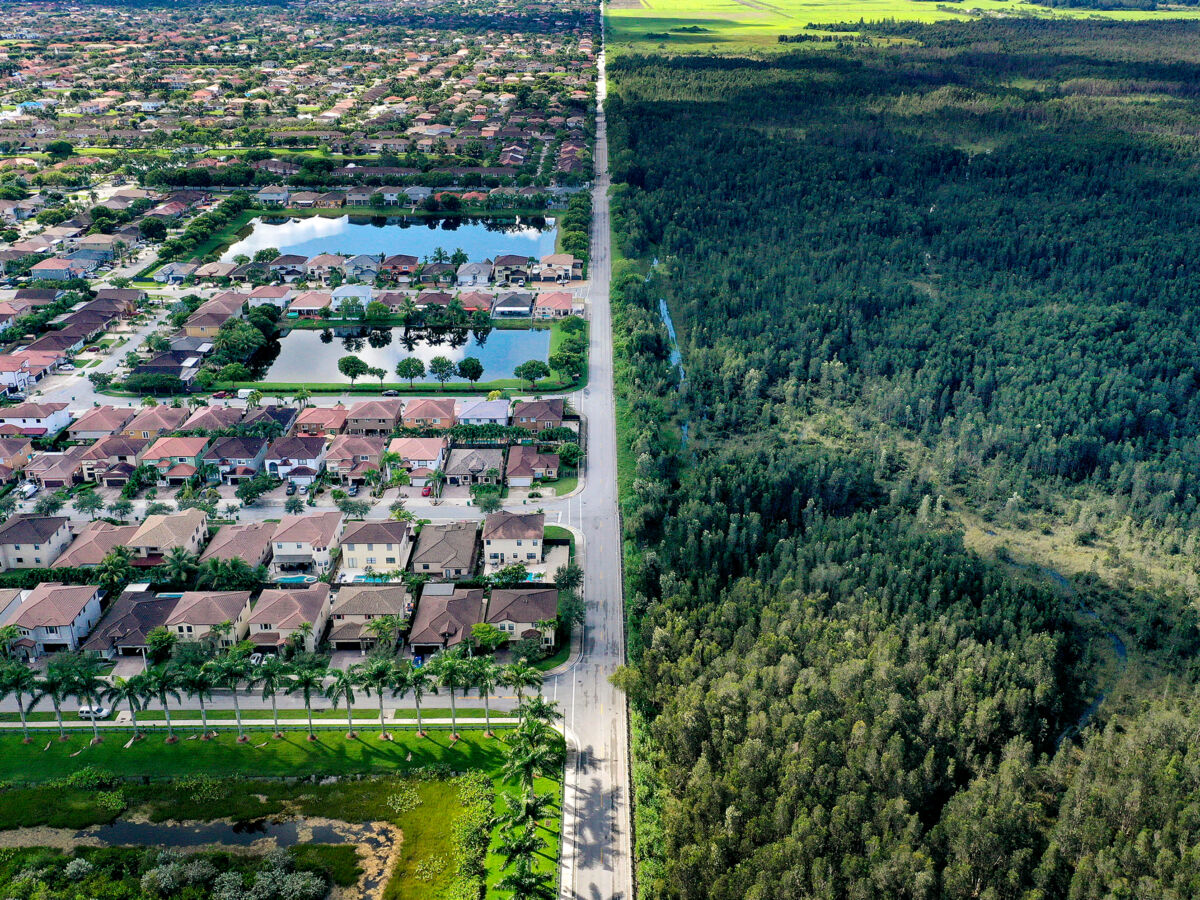
Suppose that same hectare becomes building land. Suddenly, an entirely different vocabulary of value takes over. Location, planning rules and building rights become decisive. The soil itself may be unchanged. Its price is not.
Let’s look at an example. Consider Bibbiano, a small rural municipality in Emilia-Romagna. In 2025, the administrative reference value for certain residential development areas is €191.40 per square metre. That means €1.914 million per hectare! More than 80 times the average price of an agricultural hectare in Italy. The land has not changed. What has changed is what we believe we can do with it. And so its price changes with us.
Here lies something deeply revealing about the way we measure wealth. A hectare that produces food, absorbs rainfall and supports a landscape may have a relatively low price. Give that same hectare the possibility of being sealed or built on, and its price can rise dramatically. For the owner, this may be perfectly rational. For society, the calculation is different. Agricultural and natural soils produce much more than what their owners can sell. They regulate water, limit erosion, support habitats and maintain natural capital. This reveals a simple paradox: we can increase the private price of a hectare while reducing its value to society.
This is not necessarily a failure of the market. The market is doing what we ask it to do: putting a price on what can be exchanged. The problem is everything the price leaves out. The land that never sends an invoice.
Think about water. When rain falls on healthy soil, part of it is absorbed, retained and slowly released. The soil does not invoice the municipality. It does not charge the people living downstream. It simply does the job. Seal that soil and part of the function disappears. What was previously provided almost invisibly must then be replaced through drainage systems, hydraulic infrastructure and public expenditure. In Italy, ISPRA (Italian Institute for Environmental Protection and Research) has estimated that the loss of this soil “sponge effect” associated with land take costs more than €400 million every year. When wider ecosystem services are considered, the figure rises dramatically: the loss associated with land consumption between 2006 and 2023 has been estimated at €7-9 billion per year.
So the question “What is a hectare worth?” becomes much harder to answer. €22,000? €2 million? The income it will produce? The water it will absorb? The costs it may prevent during the next extreme weather event? It depends on who is doing the accounting. And, perhaps more importantly, on how far into the future that accounting extends.
There is another problem. Just as we are beginning to understand how many functions soil performs, we are losing the very resource that makes those functions possible.
In Italy alone, almost 84 square kilometres of land were covered by new artificial surfaces in 2024. Net land consumption exceeded 78 square kilometres. That is roughly 10,000 square metres every hour. One hectare. Every hour.
It is an almost disturbingly perfect unit of measurement. By the time you finish reading this article, somewhere in Italy an area comparable to the hectare we have just been discussing may already have changed function. This does not mean that every transformation is wrong. Societies need homes, schools, businesses, hospitals and infrastructure. The point is different. For too long, we have been remarkably good at measuring the value of what we put on top of the soil, while failing to account for what disappeared underneath it.
And this is not simply an agricultural problem. Even when land remains agricultural, soil can still deteriorate. Across Europe, degradation affects a large share of soils through erosion, loss of organic carbon, compaction, contamination and biodiversity decline. It is tempting to turn this into a technical discussion. Crop rotations. Reduced tillage. Cover crops. Precision agriculture. All matter. But perhaps another question comes first. Why should we care for soil at all?
If the answer is simply “because it allows us to produce more”, we have grasped only part of the problem. The fuller answer is more demanding: because the quality of soil influences the kind of society that can exist above it. Degraded soil can mean higher costs, greater dependence on external inputs and less resilience to drought. Abandoned agricultural land can mean the disappearance of people, skills and services. And farming that cannot generate a viable income may simply convince the next generation to leave. A hectare then stops being merely a unit of area. It becomes a small unit of the future. Caring does not mean keeping everything as it is.
In recent years we have rediscovered words such as regeneration, agroecology, conservation agriculture and carbon farming. That is encouraging. But transformation cannot be reduced to a new catalogue of techniques. Deep transitions also involve values, culture and the assumptions behind our decisions. We can adopt different tillage practices. Plant a cover crop. Reduce an input. All of that matters. But the transformation becomes deeper when the question itself changes: what are we trying to obtain from this hectare?
If the answer remains simply “as much economic value as possible, as quickly as possible”, then even the best innovation may become little more than a more efficient way of travelling in the same direction. Regenerating soil therefore requires something less easily measured. Respect. Not as a romantic sentiment. As an economic principle. It means recognising that ownership does not make us absolute masters of a living system. We are temporary participants in something that existed before us and will continue after us.
There is, finally, a problem of time. Businesses think in financial years. Farmers think in harvests. Governments think in electoral cycles. Soil operates on a different timescale. Forming just two or three centimetres of soil can take as long as a thousand years. A thousand years. Roughly forty human generations. Perhaps this is the most important number of all. Because it exposes the imbalance between the time needed to build a resource and the time required to damage it.
One generation can consume something that dozens of generations may be unable to recreate. This changes the meaning of asking a farmer to protect soil. We are not simply asking someone to manage a factor of production more efficiently. We are asking them to steward a form of natural capital from which society as a whole benefits. And if society asks farmers to provide that service, society must also be willing to recognise its value. Through policy and markets. Through research and knowledge exchange. And culturally, by seeing those who manage land not only as producers of commodities, but as custodians of a resource on which everyone depends.
None of this means romanticising a rural past that was never idyllic. Land has also meant hardship, poverty, inequality and conflict. We do not need to go backwards. We can do something far more interesting: carry forward the lessons we should never have forgotten.
Satellites, sensors, genetics, robotics, data and artificial intelligence can help us understand and manage soil better than any generation before us.
But no technology can decide how much it should matter that a field remains fertile fifty years from now. That is not a technical decision. It is a societal one. We often say that we must “save the soil.” It is a generous expression. It is also slightly arrogant. Soil was here long before us. It does not need us nearly as much as we need it. Almost all our food ultimately depends on a few centimetres of living earth. Within that thin layer lie processes built over centuries and millennia. From it come food, water regulation, biodiversity, landscapes, economies and communities.
Caring for soil can certainly be an act of love. But calling it only that would diminish it. It is an economic act, because it protects productive capacity. It is a social act, because it helps keep territories and communities alive. It is an act of responsibility, because it means refusing to consume today what others will need tomorrow. Above all, it is an act of intelligence.
We may build larger cities, more sophisticated economies and technologies capable of taking us farther than any previous generation could imagine. And yet we continue to depend on a few centimetres of living soil beneath our feet.
Perhaps our greatest mistake was never that we failed to understand how much soil was worth. It was that we confused its price with its value.