

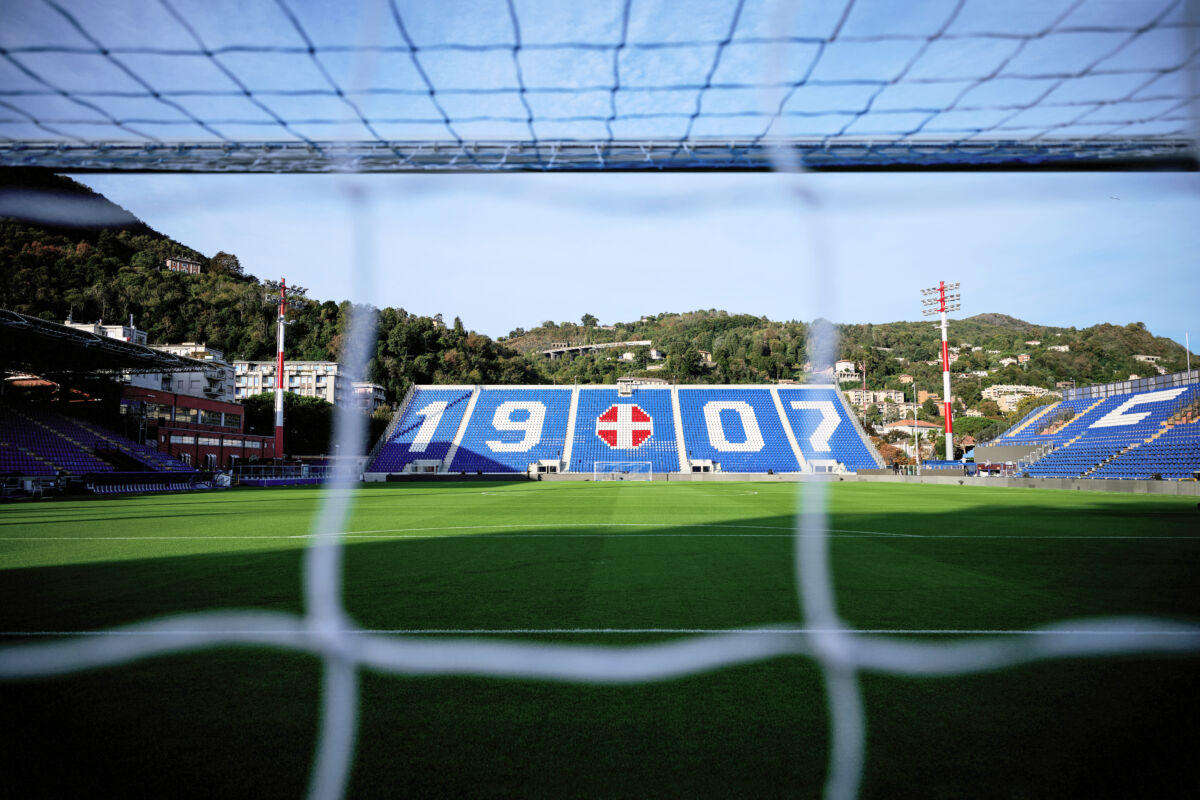
On the eve of Como’s first-ever Champions League match, President Mirwan Suwarso made a gesture that seems straight out of a novel about the new global football: he gave up the executive seats – the most coveted and visible ones -to allocate them to the oldest fans, those born before 1950. Not sponsors, not celebrities: the club’s oldest supporters, the guardians of its memory. Those who saw the Sinigaglia stadium half-empty in Serie D, who endured bankruptcies, celebrated comebacks and suffered spells in the lower divisions. In that choice-highly symbolic and at the same time perfectly aligned with the club’s narrative-lies the heart of the tension that defines Como 1907 today: a club that aspires to be – and to some extent already is – a global platform, but one that must continually prove it remembers to be local. The ideal laboratory for a form of football that no longer limits itself to competing on the field, but reinvents itself as an infrastructure for the attention economy, tourism, and entertainment. On the question of whether the club is more “local” or “global,” even the President of the Senate, Ignazio La Russa-the second-highest-ranking official in the state and a well-known football fan-weighed in during an exchange with Alessandro Sallusti, the Como-born editor-in-chief of the daily newspaper Libero: “If Como made it to the Champions League, the credit goes first and foremost to the people of Como,” was the gist of his remarks.
Como belongs to the people of Como. But when the club’s focus was “local”, Como was rather on the periphery of Italian football: a team oscillating between Serie A, Serie B, and, more often than not, the lower divisions. A club with a recognizable yet marginal tradition, tied to the city, to the stadium on the lake, and to a fan base more accustomed to suffering than to the spotlight. Everything changed in 2019, when the Hartono family-one of Asia’s wealthiest, owners of the Indonesian Djarum Group-acquired the club after years of financial difficulties. A rapid rise began, led by a coach, Cesc Fàbregas, young but undeniably talented and decidedly popular. Como climbed from Serie D to Serie B before Cesc Fàbregas arrived as a player in 2022. After moving into coaching, the former Spain international helped secure promotion to Serie A in 2024 and subsequently led the club into European competition.
The scale of Como’s transformation became unmistakable on November 4, when Fàbregas’s side demolished Lens 9-1 away from home in the Champions League. It was a historic result for a club that, just seven years earlier, had been playing in Italy’s fourth tier, and a reminder that Como’s global ambitions are no longer confined to branding and business.
But it would be reductive to view the Como case as just another story of foreign capital buying a club in crisis and taking it “to the top.” The real break with the past lies in the strategic vision.
While many international investors view football primarily as a sporting and financial asset to be revalued on the field and on the balance sheet, Como was conceived from the outset as something different: a hub bringing together football, fashion, luxury tourism, hospitality, media, and entertainment, using Lake Como as its main narrative and commercial lever. No longer just a club that organizes matches, but a platform that produces and distributes experiences, content, and economic and symbolic relationships. As the Financial Times summarized, the metamorphosis is the transition from a simple football club to a lifestyle brand.
On the surface, nothing could be more “provincial” than Como: a historic stadium like the Sinigaglia, bleachers just a few meters from the water, a limited fan base, and a small-to-medium-sized city that, in terms of population, economy, and customs, is worlds apart from Italy’s major economic capitals. Yet it is precisely this context that becomes the key to its international positioning. Lake Como is one of the most iconic destinations in global tourism: a magnet for celebrities, a backdrop for film sets and fashion shoots, and a destination for high-end tourism. Against this backdrop, Como ceases to be merely the city’s football team and becomes the point of contact between two worlds: football and the lake’s global image.
On one hand, the Sinigaglia Stadium stands as a bastion of memory: the fan section, the longtime season-ticket holders, and the grassroots identity of a fan base accustomed to the limitations of a small-town team. On the other, a project that links the club to luxury brands, limited-edition fashion collections, hospitality packages designed for international tourists, digital content in multiple languages, and communications that resonate more in New York and Jakarta than in Varese or Lecco. The crucial element is that Como does not try to hide its provincial identity to appear “big”; it does the exact opposite, transforming its local roots into a global asset. The lake, the city, the historic stadium, and even the romantic, cinematic image of Como become central elements of the club’s international narrative.
Here we see the broader transformation: from a football club to a global platform. For much of the 20th century, a football team was a sports community rooted in a specific territory-an expression of a city, an industrial district, or a social class. Serie A was also a map of national capitalism: clubs linked to major industries, entrepreneurial families, and local supply chains. Como tells a different story. Its ownership does not stem from a Como-based industry, but from a global conglomerate that finds in the lake the ideal location to bring together real estate investments, tourism, hospitality, digital content, and connections to the luxury sector.
Football simultaneously becomes a product, a showcase, and an interface. A product, because the game, the team, and the result remain at the heart of the offering. A showcase, because during the ninety minutes broadcast worldwide, a region, a landscape, and partners are showcased. An interface, because the club serves as the gateway to an ecosystem of experiences and services: weekends on the lake, hospitality, co-branding with high-end hotels and restaurants, events, and networking opportunities for international sponsors and investors. Como doesn’t just sell tickets, TV rights, and jerseys-it sells an image, a vision of a possible lifestyle, a narrative.
It is also one of the least “Italian” clubs in Serie A. With Indonesian ownership, international management, Cesc Fàbregas on the bench, a squad heavily made up of foreign players, and multilingual communication, Como – which presents itself as the contemporary face of Italian football-challenges the very idea of what it means today to “be an Italian club.” How “national” can a club still be when it has global capital, a geographically dispersed fan base, multinational sponsors, and infrastructure designed for a transnational audience?
In a Serie A that is increasingly dependent on foreign capital, with obsolete stadiums, historic clubs in distress, and competition from the major Anglo-Saxon leagues, Como foreshadows a possible future: one in which clubs are less tied to an industrial or territorial identity and more akin to global entertainment companies that operate from a specific location but are no longer “of” that location in the traditional sense. “Italianness” – or rather, “Comaness” – becomes a narrative device: Italy is the aesthetic backdrop, the lake the symbol, the city the setting. A “Made in Como” rather than a “Made in Italy,” which challenges the boundary between authenticity and marketing.
Seen from abroad, Como thus appears as the prototype of a new Serie A: less tied to the great factories of the North and to long-established family owners, and closer to the logic of the creative industries, luxury tourism, and social media. The location is no longer merely a backdrop but part of the product: attending a match in a stadium overlooking one of the world’s most famous lakes is, in and of itself, an exportable experience. Centered around this core are collaborations with fashion and lifestyle, digital disintermediation, and the production of original content that transforms Como into a cultural brand even before it is a sports brand.
The result is an unprecedented hybrid: a club with a modest record of top-flight success, yet one that, on a symbolic and communicative level, positions itself as an international phenomenon. A team that shares the standings with Cagliari and Lazio but aspires – in terms of visibility and brand perception – to be in the same conversation as club-brands like PSG or Inter Miami.
For this reason, Como should not be viewed as a folkloric curiosity of Italian football, but as a laboratory for the European club of the future. Some of the dynamics currently unfolding on the lake – the convergence of sports, tourism, fashion, and digital content; the high-profile marketing of the surrounding region; and global ownership that uses the club as a platform for building relationships – could become structural elements for many clubs across the continent in the coming years.
However, questions remain that bring us back to Suwarso’s initial move. To what extent can clubs transform themselves into global platforms without breaking their original pact with their local community? What remains “popular” about a team that thrives on partnerships with luxury and elite tourism? And to what extent is this model replicable in less picturesque settings, where the local area lacks the symbolic capital of Lake Como?
Viewing Como merely as a fascinating story-the team by the lake, the Indonesian investors, Fàbregas, the celebrities in the stands-risks causing us to lose sight of its most significant aspect: that of a prototype. A prototype of a club that was founded in the provinces and has repositioned itself as a global brand; that started out as a grassroots team and became glamorous; that has local roots but international capital and governance; that plays football but also sells fashion, tourism, hospitality, content, and lifestyle. The question, then, is not whether Como will become a “big” team in the traditional sense, defined by titles and trophies. It is whether the “Como model” foreshadows a new vision of a major European club: one defined less by the national sports hierarchy and more by its ability to function as a global platform for experiences, relationships, and narratives-in a football landscape where geography ceases to be a boundary and becomes the primary narrative asset. Perhaps not very romantic, but tremendously effective.