

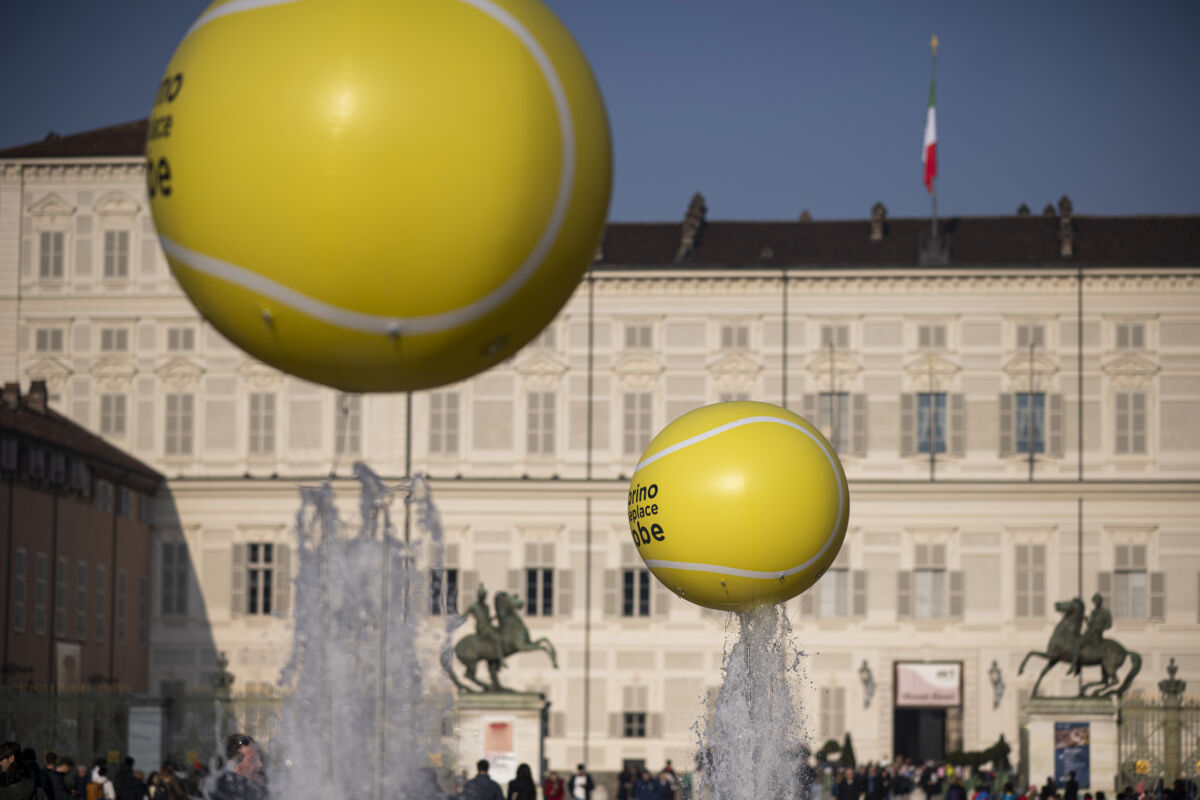
These past few days, Turin woke up with tennis on its mind. On trams, in cafés, and over dinner, people talked about matches and made predictions. The ATP Finals – the end-of-season tournament that brings together the world’s top eight players – have transformed the city for more than five years now: hotels welcome fans from abroad, restaurants fill up, and tennis becomes part of everyday conversation, even for those who rarely follow the tour. This year, the forced absence of Jannik Sinner – which sparked some controversy over the speed of the court surface and the cost of tickets – was deeply felt. But the energy surrounding the Finals points to something bigger than a single champion: tennis is booming and is redefining its role in international sports.
The numbers behind the boom
The scope of this phenomenon is illustrated by the International Tennis Federation’s (ITF) third Global Tennis Report, the most comprehensive survey ever conducted on participation in the sport. Just under 106 million people play tennis in 199 countries, up from 84.4 million in 2019. The report is based on responses from national federations and independent sources, including government agencies and commercial organizations. Its findings apply to everyone, from casual players to competitive athletes: the number of people playing tennis is higher than ever and has consistently exceeded 100 million.
The United States leads in total number of players, with 23.8 million. In terms of percentage of the population, however, Great Britain ranks first, at 13.4%, followed by Canada at 12.8%. Asia has the largest number of players, with 35.3 million, accounting for 33.4% of the global total. The sport’s infrastructure is extensive: there are 698,034 tennis courts worldwide, 91.2% of which are outdoors. Hard courts account for 55.3%, while clay courts account for 25.7%. Tennis is played in many settings, from traditional clubs to parks, schools, and neighborhood courts.
New players, new audiences
This growth is not limited to major tournaments. It is also fueled by recreational play and the desire to exercise and spend time with others. The pickleball boom in the United States-an accessible, easy-to-learn racquet sport played on smaller courts-reflects this same interest. According to the Sports & Fitness Industry Association, there were 13.6 million pickleball players in the United States in 2023, a 51.8% increase from the previous year. Rather than simply competing with tennis, its success highlights the demand for social sports that are easy to play and fit into everyday life. Tennis can capitalize on this interest by making courts, beginner classes, and opportunities to play more easily accessible.
Younger generations are also discovering the sport thanks to its stars, social media, and the ability to watch matches live or on demand. Tennis combines intense action with breaks that allow for stories about players and rivalries. A match can be a televised event, but also a series of highlights shared and discussed online. Digital and television audiences extend the game’s reach far beyond the stands, while also encouraging tournaments and circuits to rethink how they present the sport.
ATP President and former Italian tennis player Andrea Gaudenzi described this moment as a period of great momentum for tennis worldwide. “Last year we had a record attendance of 5.5 million spectators”, he said, noting that growth in Italy has been particularly strong thanks to Sinner. A champion can spark interest and attract new viewers, but the lasting impact depends on what the sport builds around that enthusiasm: accessible facilities, opportunities for young people to play, and ways to introduce the public to other players.
The economic impact of a global game
Major tournaments demonstrate how tennis can stimulate tourism and economic activity. An international event brings athletes, staff, journalists, sponsors, and fans to a city, increasing demand for hotels, restaurants, transportation, and other services. It also offers local businesses and the region international visibility. But the impact shouldn’t be measured solely in terms of ticket sales or hotel stays. It is important that the facilities be used year-round, that residents have access to them, that local businesses benefit from them, and that the event helps make the sport more accessible. A successful tournament should leave a lasting legacy even after the stands have emptied.
Turin is now the tennis capital of Italy, with the Finals serving as its most visible showcase. The event has strengthened the city’s connection to a sport that, until recently, occupied a much more marginal place in the collective imagination compared to soccer. This shift is reflected in the federation’s data: for the first time, the number of registered tennis players has surpassed that of registered soccer players, and the FITP’s revenue has exceeded that of the FIGC. This comparison should be made with caution, as registration criteria and the scope of the federations’ financial accounts may differ. Nor does it mean that soccer has lost its central role. It does, however, demonstrate that tennis has broadened its base and attracted new resources, thanks to international successes and the enthusiasm generated by Sinner and other Italian champions.
Bigger revenues, tougher challenges
For Gaudenzi, consolidating this growth requires a shared vision. “Tennis is strong but fragmented,” he said, calling for an agreement between the ATP, the WTA, the four Grand Slam tournaments, and the international federation to create a unified governance structure and a commercial entity. In his view, this fragmentation makes tennis “too slow” to compete with Formula 1, the NFL, the NBA, and the Champions League. The challenge is not simply to promote the sport more effectively or to coordinate schedules, but to give it a recognizable identity and a shared strategy without erasing the distinct histories of its tournaments.
Right at the close of the Turin event, as part of the “OneVision” project, the ATP president announced a package of reforms set to take effect in 2028, aimed at boosting players’ earnings (the total prize money will exceed $350 million) and enhancing the Masters 1000 tournaments, the flagship events of the circuit. The issue of an already overbooked calendar-which has turned top-level tennis into a sport for bionic athletes-remains on the table. But we’ll see.
Rethinking the viewing experience
The viewing experience is another area in need of attention. Gaudenzi pointed out that the ball is in play for only 15-20% of a match and that players’ rest periods deserve consideration. Breaks are part of the rhythm and tactics of tennis, but they can make matches harder for newcomers to follow. Improving the viewing experience could involve making matches easier to follow, engaging spectators between rallies, and making better use of technology. Gaudenzi said he is “fascinated” by artificial intelligence, which the ATP has already implemented in its decision-making process. Digital tools can support analysis and help the public understand the game.
Turning growth into lasting social value
Tennis also has a public health dimension. A 2018 study published in Mayo Clinic Proceedings, based on the Copenhagen City Heart Study, linked regular participation in racket sports to a longer life expectancy compared to a sedentary lifestyle. For tennis, the estimated difference was 9.7 years. This is an observational association, not proof that tennis alone extends life; initial health status, economic conditions, and other behaviors also play a role. However, the finding is consistent with broader evidence regarding physical activity. Tennis combines movement, coordination, and concentration, and recreational play offers social interaction-factors that can help people maintain an active lifestyle.
Ambitious investment plans are supporting the expansion of the sport. World Tennis has stated that it will reinvest at least 85% of its annual revenue into tennis over the next decade, supporting 214 national federations and aiming to increase the number of players from 106 million to 140 million by 2035. Growth cannot be limited to prestigious tournaments or established markets. To be sustainable, it must reach underserved areas, support federations, expand the availability of courts, and encourage young people to take up the sport. It will also be important to transparently track where resources are allocated and what outcomes they achieve for communities.
For Europe, tennis offers a useful case study: a global sport that generates economic value, attracts visitors, and can contribute to well-being, but depends on infrastructure, investment, and equitable access. Major events put the sport in the spotlight; the quality of growth is measured in everyday life-that is, in people’s ability to find a court and play without cost or distance becoming obstacles.
In Turin, Sinner’s absence was felt, but it did not diminish the energy of the Finals or the significance of the occasion. Tennis has carved out a new place for itself in the economy and society, both in Italy and around the world. Its future will unfold in large stadiums and on screens, but also in clubs, schools, and public courts. It is there that curiosity can become a habit, that a new generation can discover this sport, and that the global boom can leave a lasting legacy for communities.